

Calgary’s architectural diversity, ranging from vintage castles to modern business centres, captivates not only tourists but also local residents. Every structure is unique and has its own distinct history, adding a special charm to the city. More on calgary-future.
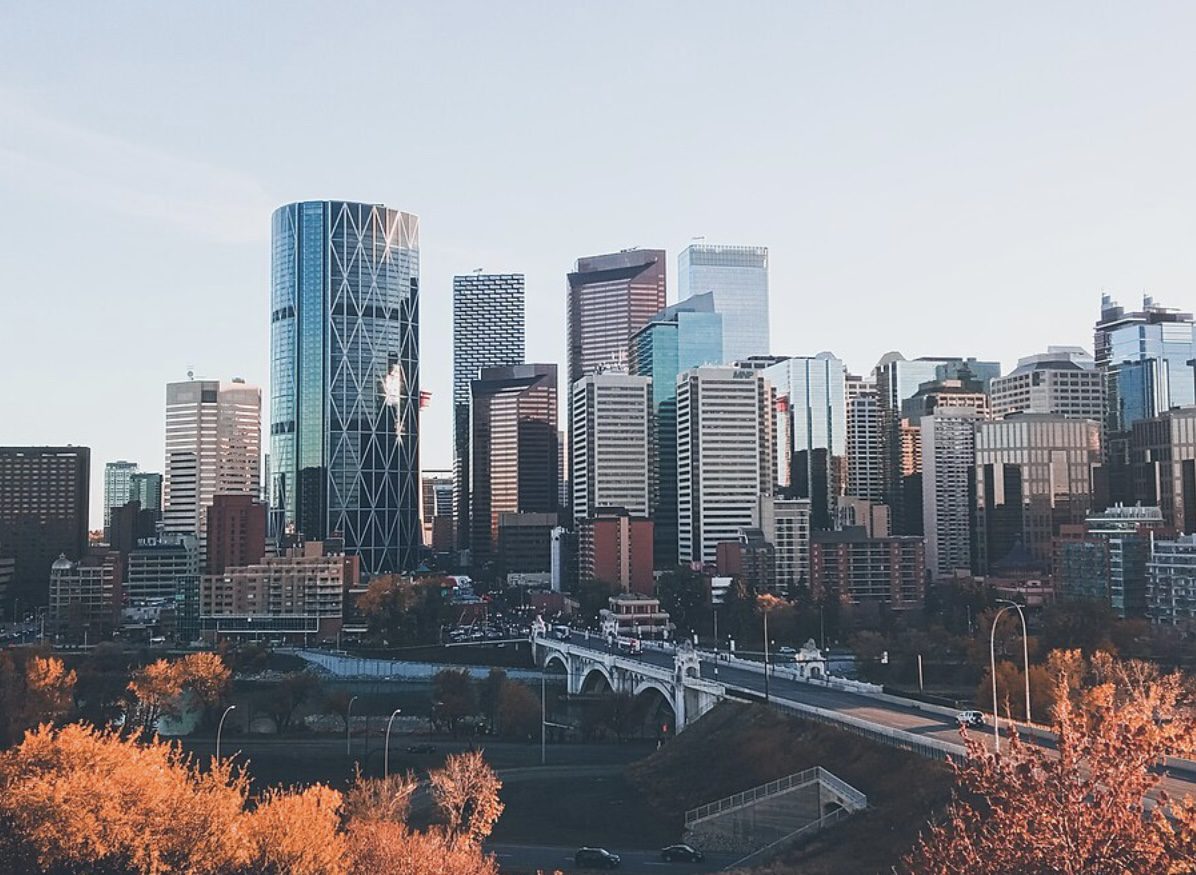
One of the most famous structures in Calgary, and arguably all of Canada outside of Toronto, is undoubtedly the Bow Tower. It became the city’s tallest building when it was completed in 2012. Since then, it’s become virtually impossible to imagine Calgary without the Bow Tower, as it has cemented its place as a city landmark.
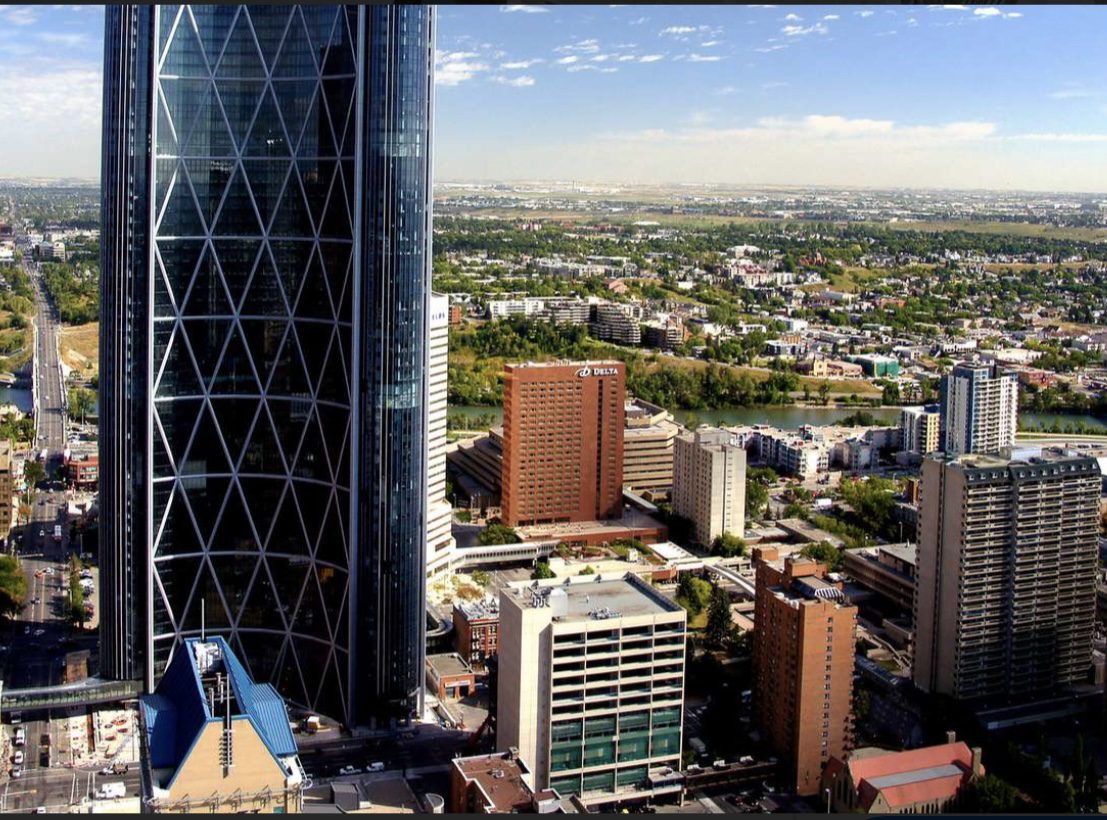
The Bow Tower’s Architectural Features
The idea to build the skyscraper originated with Encana, a prominent oil and gas company in Calgary, back in 2006. Initially, they planned to construct 2-3 buildings, but their vision quickly changed. They began discussing a massive project to build the tallest structure not just in Calgary, but in all of Canada. The famous British architect, Norman Foster, also joined the work on the Bow Tower.
Early sketches of the skyscraper show that the building was initially planned to be slightly larger than the structure unveiled in 2012. It was intended to have 58 floors and reach 247 metres in height, conceived in a crescent shape. Another building included in the project was supposed to incorporate the old “York” hotel.
So, why the changes to the sketches? The developers became concerned that the building would cast a large shadow over the pedestrian and bicycle paths near the Bow River. However, the unique shape remained, as it was not only a design decision but was also strategically formed by analyzing the local climate.
The Bow Tower faces south and curves away from the sun, which helps maximize the benefits of daylight and heat. Furthermore, this form minimizes the amount of steel used in the building’s facade. The skyscraper’s framework is entirely steel, requiring 48,000 tonnes of steel for its construction. Interestingly, each visible ‘cube’ of the skyscraper encapsulates six floors.
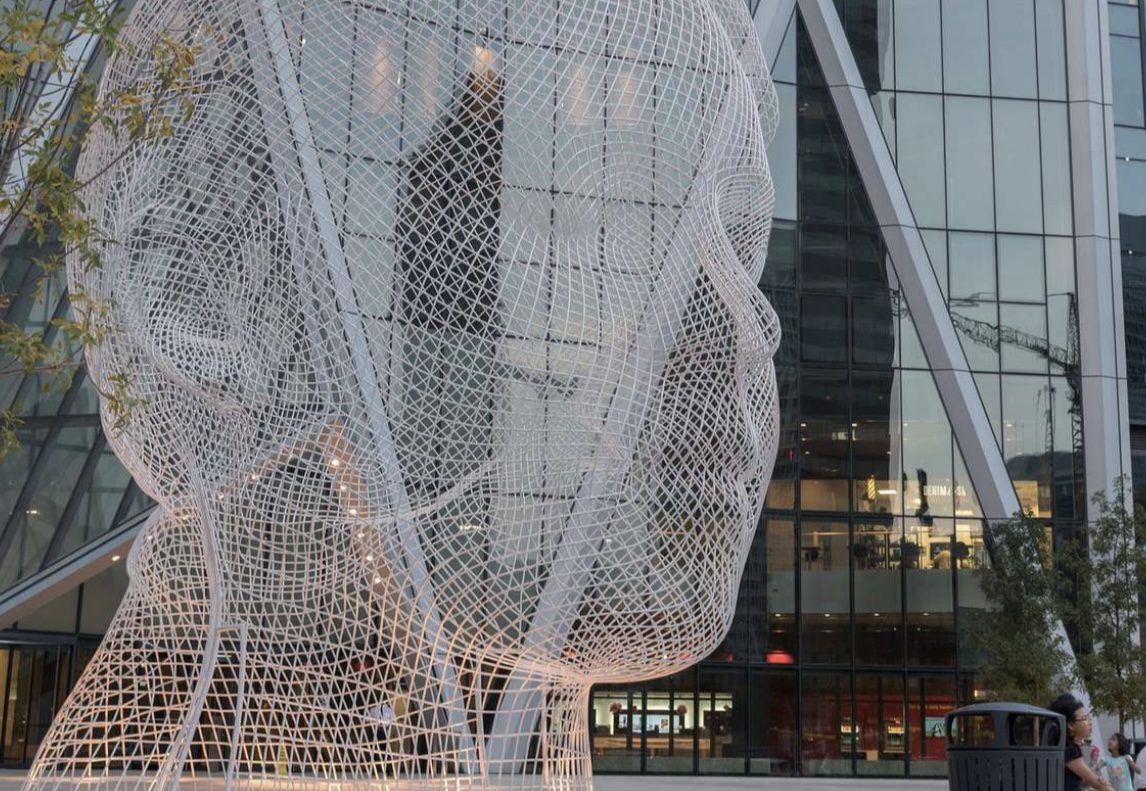
The second floor of the building is open to residents and visitors, housing a variety of cafes and shops. Outside, the Bow Tower’s arch is landscaped, forming a public plaza. At the centre of this plaza stands the famous sculpture by the distinguished Spanish artist Jaume Plensa, titled “Wonderland.”
The Construction of Calgary’s Skyscraper
After lengthy approvals and design changes, construction on the Bow Tower began in 2007. To build the underground parkade, 6th Avenue was closed, causing significant, though temporary, traffic headaches for city residents.
Construction was progressing well until the financial crisis hit in 2008, forcing a temporary halt. The company faced funding issues but soon managed to invest an additional 400 million dollars into the project. Work on the Bow Tower resumed as quickly as possible.
Until 2010, the tallest building in Calgary was the Suncor Energy Centre, built in 1983 and standing 215 metres high. However, that changed when the Bow Tower reached 218 metres, and construction was still far from over. A few months later, Calgarians watched as the magnificent structure soared to 237 metres.
Official construction was completed six years after the start of the project, in 2012. The opening of the city’s tallest building took place a year later with grand speeches, exciting events, and fireworks. Soon after, the Bow Tower filled up with numerous stores, restaurants, cafes, conference rooms, food service establishments, and the elevators and staff facilities became operational.
A Brief Profile of Norman Foster
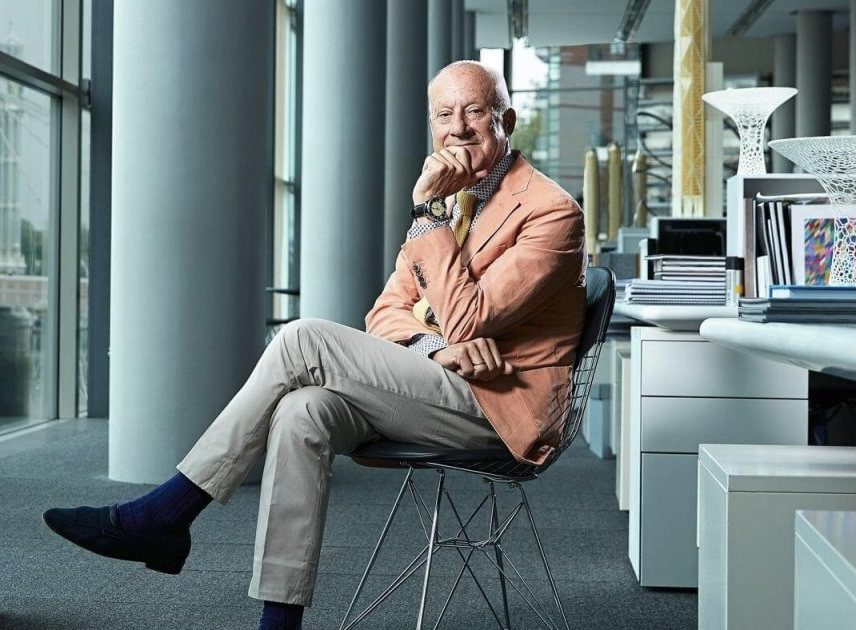
Norman Foster is a British designer and architect, born on June 1, 1935, in Manchester. He is the most famous representative of the High-Tech style and one of the most significant architects of the 20th and 21st centuries, often called the “Father of the Megapolis.”
Norman Foster designs projects for skyscrapers, airports, subway stations, and bridges. Furthermore, he launched an initiative to participate in the post-war reconstruction of Kharkiv, and he ceased all work on projects in the aggressor country. His commitment goes beyond words; the architect already has a preliminary manifesto plan for the city.
Among the architect’s notable works are the 30 St Mary Axe tower and City Hall in London, the Hearst Tower in New York, the Millau Viaduct in France, the Commerzbank Tower in Frankfurt am Main, and many other projects that embody a seamless blend of glass and metal.