

The Lougheed House was originally built for a young family, yet it quickly earned the distinction of a national historic site—a rare fate when similar buildings in Calgary were being demolished without a second thought. Why did this happen? Who were the prominent owners of this famous house, and what architectural secrets does it hold? Read on to find out more on calgary-future.
A Home for a Young Couple
It all began in 1883 when James Alexander Lougheed and Isabella Clark Hardisty moved to Calgary. Initially, they simply dated, strolled the city streets, and shared their dreams, perhaps not even suspecting that their budding affection would blossom into something more, leading them to marry soon after.
James was a promising young lawyer. Isabella came from a family of fur traders and was the niece of Lord Strathcona, the Chief Factor of the Hudson’s Bay Company and a highly influential political figure of his time. Marrying Isabella was thus quite advantageous for James, as these family connections could easily pave the way for a successful career.
Once Lougheed was appointed to the Senate, he could finally afford to build the family’s dream home. By 1891, a stately mansion, not just a simple house, stood on a 2.8-acre vacant lot. The Lougheed family, which by then included several children, soon moved in. The house was spacious enough that the owners could provide a separate room for each child.
Next to the house was a beautiful garden where the whole family could relax outdoors. The Lougheeds also kept horses. In short, they had everything needed for their children to grow up in the best possible conditions, lacking for nothing. The Lougheed House was not only an ideal family haven but also one of Canada’s finest residences, serving as a political and social hub in a rapidly developing Calgary.
The Architectural Splendour of Lougheed House
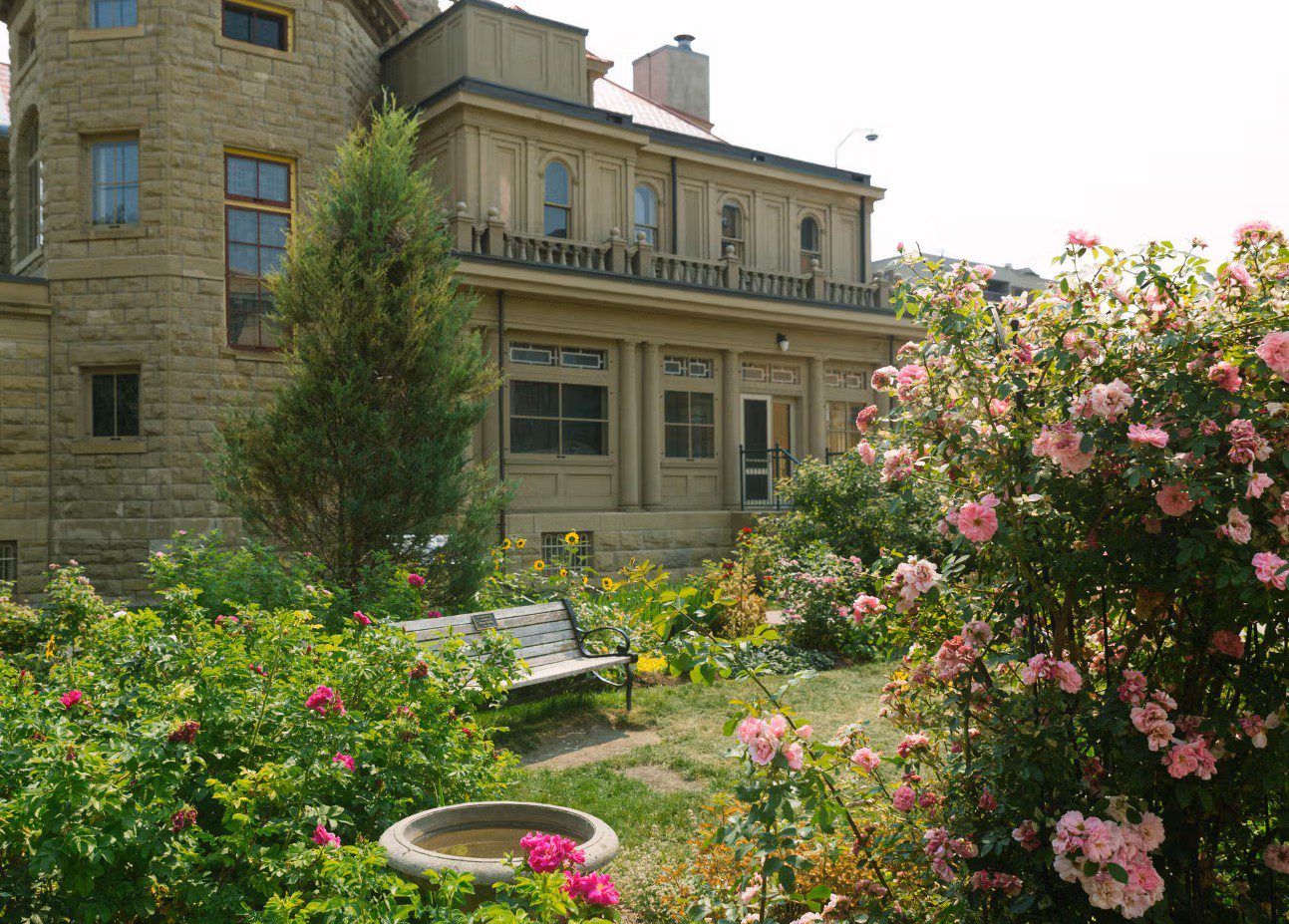
The plans for the Lougheed House were drawn up by architect James Bowes in the High Victorian Eclectic style. The house was built at the peak of the Victorian era, influenced by other popular architectural styles of the time. This fusion makes the house look both grand and whimsical simultaneously.
In his creation, James Bowes combined French Château and Neo-Romanesque styles, visible in the building’s steep roofs and stone-built walls. We can also spot the Queen Anne style in the asymmetry of the exterior. Large chimneys and exquisite railings complete the Lougheed House’s composition.
The house is truly unique; similar structures are hard to find both in Calgary and beyond. This is likely because the Lougheed House was James Bowes’s final work. He was unable to develop this style further in construction, as he passed away shortly after completing the project.
The Lougheeds’ home featured a luxurious library with built-in cabinets, sliding glass doors, and a fireplace. Alongside a collection of legal books, it boasted volumes on various topics, as the Lougheeds were avid readers. Furthermore, they made a tradition of giving newlyweds copies of Shakespeare’s works as wedding gifts.
Following Isabella’s death, her book collection was sold off for a mere $22. By 1938, almost nothing remained of the once magnificent library.
It’s also known that Isabella and her daughter Dorothy loved to dance the tango every Saturday. However, the basement ballroom wasn’t actually finished until 1907, following a renovation of the residence.
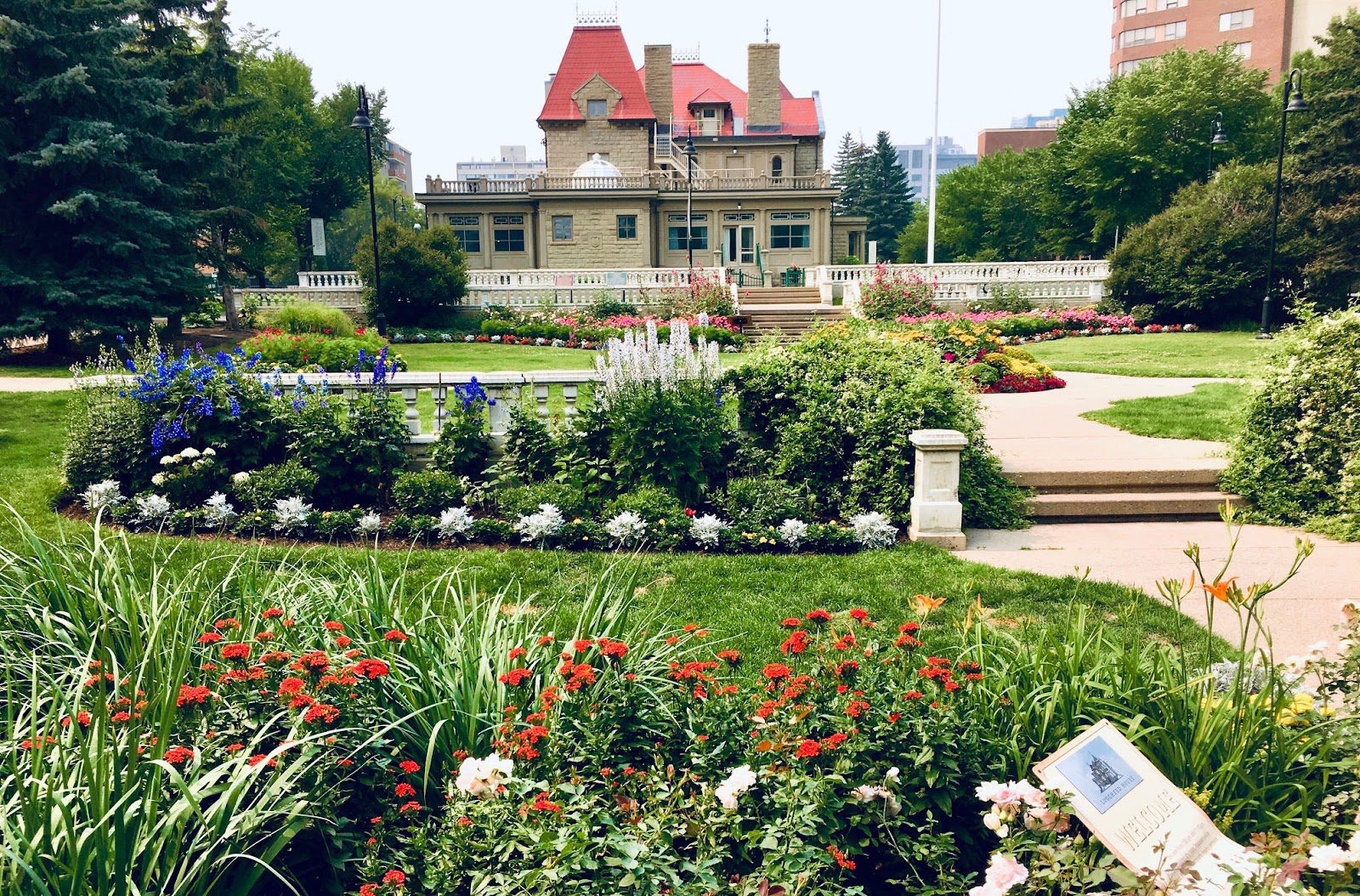
Equally interesting, the Lougheeds’ property included a coach house, stables, and extensive gardens. Lilac bushes grew here, alongside blooming petunias, roses, marigolds, and more. A fountain surrounded by flowerbeds was a central feature of the main garden. It is also worth noting that the land Lougheed purchased was hilly and contained a boggy hollow, which was cleverly transformed into a terraced garden. The rest of the land was used as pasture for livestock.
A House of Historical Significance
From the day it was completed, the Lougheed House saw a lot. It survived fires and floods, stood through both times of repression and economic booms, and witnessed the evolution of the city growing around it. Since the house endured so many historical twists and turns, its original purpose shifted, and it began to serve community needs.
During the Great Depression, its walls housed a vocational training centre for women, and during the Second World War, it became a women’s barracks. The Lougheed House also served as a Red Cross centre, where people came to donate blood from all corners of Canada. In 1970, Red Cross workers added several extensions, which negatively impacted the building’s condition. When they eventually vacated the premises, the citizens were able to save the historic landmark from ruin. After that, the Lougheed House stood empty for 15 long years.
Many similar historical buildings were torn down, but the Lougheed House endured because it was constantly in use and always needed by the community. Even after a century, it remains an important city landmark, having transformed over time into a historical museum in Calgary.
The Lougheed House has changed slightly over the years, but it hasn’t lost its grand, whimsical charm. It remains highly valued by locals. So, if you’re lucky enough to visit Calgary, be sure to stop by the historical museum located in the Lougheed House.