

Sometimes people must leave their homeland in search of a better life—whether they are lucky enough to build a career abroad, invited by a spouse to live in their country, or, tragically, forced to flee their homes due to war. More on calgary-future.
Often, people leave everything behind, bringing only their faith to a new place to help them hold onto a brighter future. The population of Calgary is largely composed of such individuals—immigrants and migrants. Each person believes in their own God and wants a place to worship. To offer comfort to these souls, several religious temples of various denominations have been built across the city. This includes the Ukrainian Orthodox community.
Such places frequently serve more than just a sacred function; they also help refugees find shelter and support during difficult times. One such place is St. Vladimir’s Cathedral, located in Canada at 404 Meredith Road NE, Calgary.
How the Cathedral Rose from the Ashes
St. Vladimir’s Cathedral was first built in 1938 thanks to the efforts of the local Ukrainian community. For 38 long years, the cathedral was more than just a sanctuary; it was a gathering place for Ukrainian Orthodox faithful. Unfortunately, disaster struck in 1976. Due to a short circuit, the cathedral was completely destroyed by fire. Everything inside the building sustained significant damage; the entire interior and its decorations were burnt. Icons were lost to the devastating power of the flames, though thankfully, there were no casualties.
Parishioners spent nine years fundraising for the reconstruction. Only through the combined efforts of the Ukrainian community and concerned Calgarians did the cathedral finally rise from the ashes. It once again opened its doors to save Orthodox souls and hold church services for all those in need.
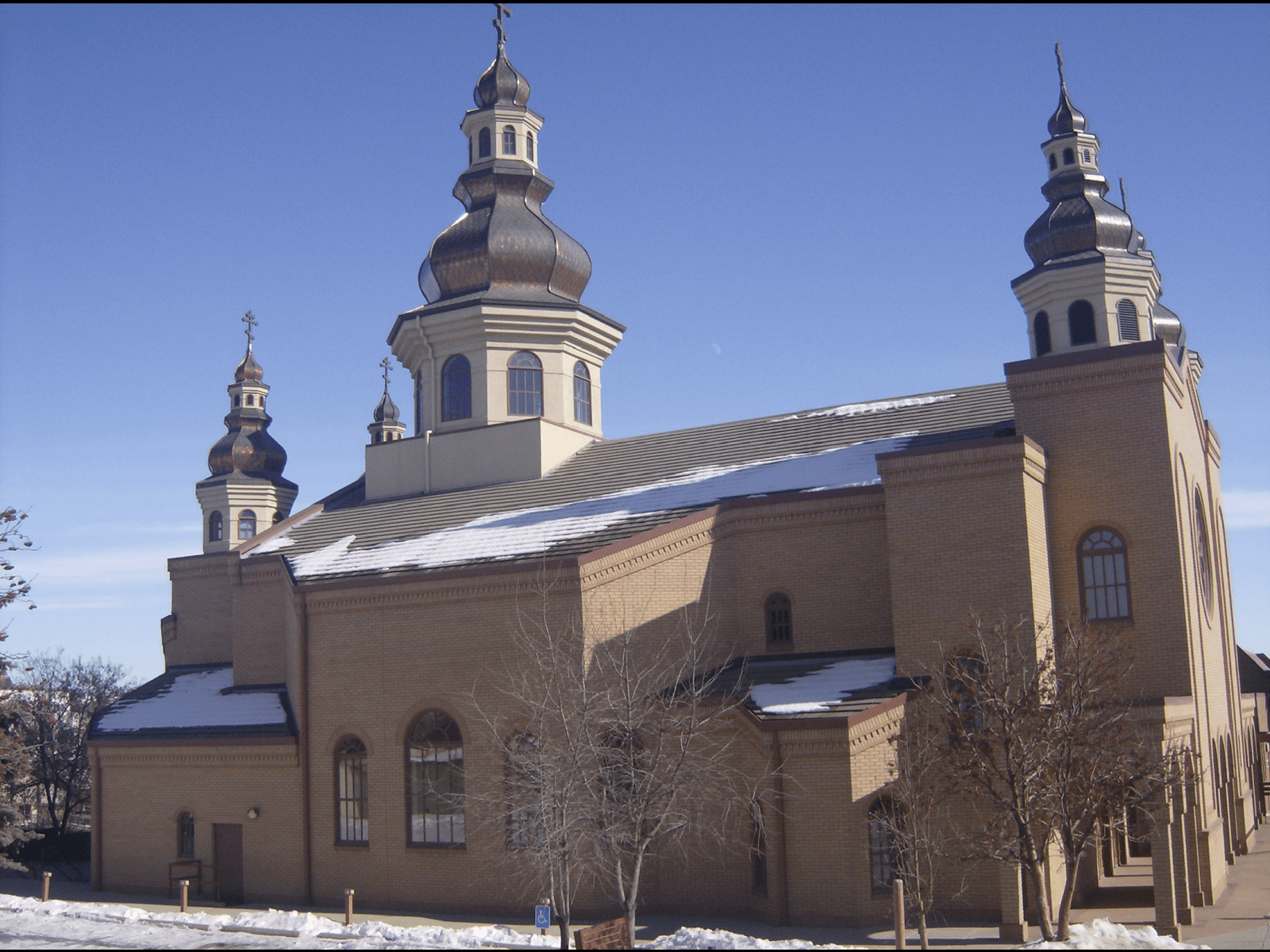
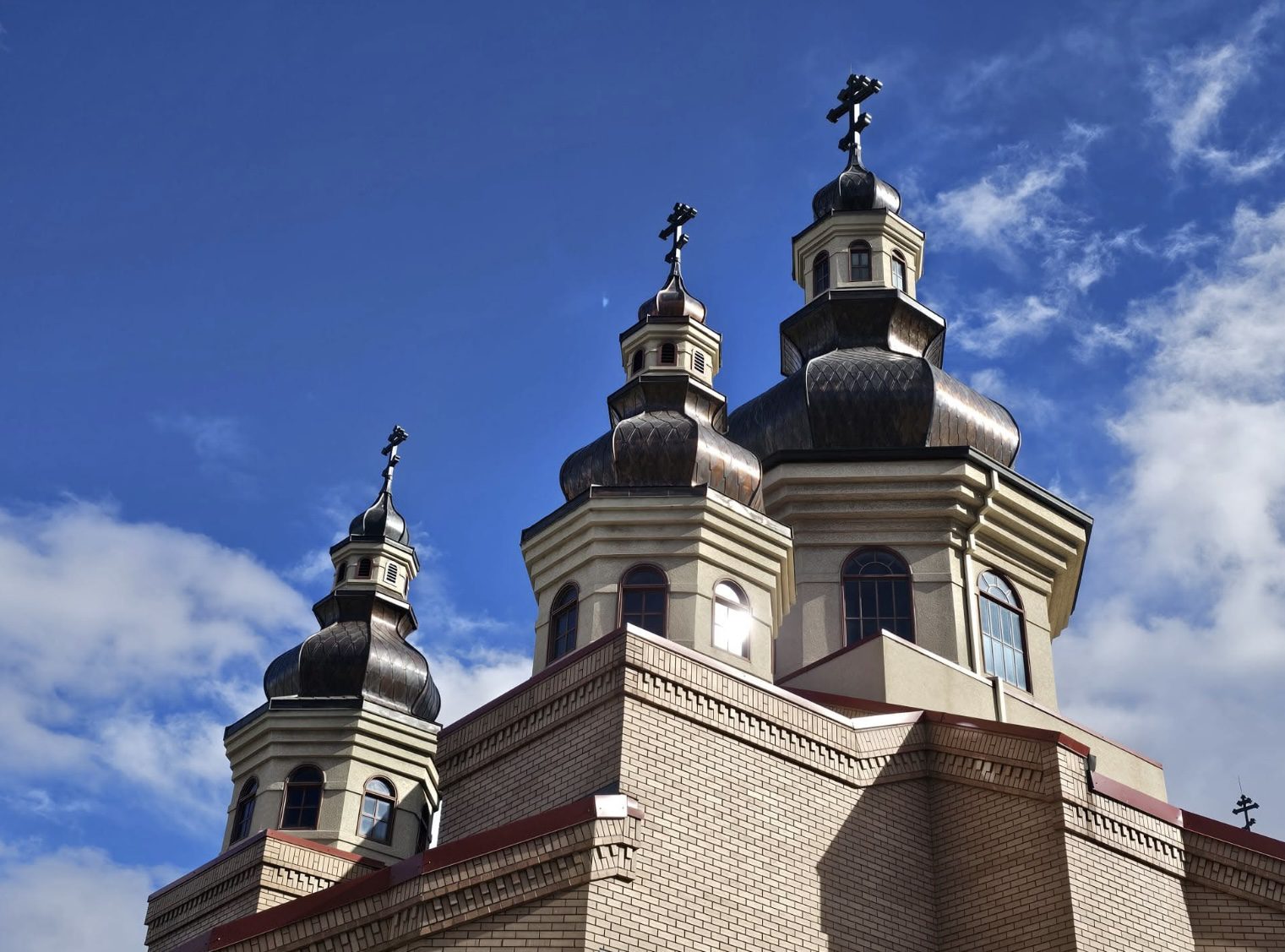
St. Vladimir’s Cathedral was rebuilt in the Byzantine Revival style, where traditional Ukrainian church aesthetics are organically blended with features of Western architecture. The building is topped with five copper-covered, onion-shaped domes. The three largest domes symbolize the Trinity—the Father, the Son, and the Holy Spirit.
The cathedral walls were constructed using brick, typical of buildings from the second half of the 20th century, and the windows feature the arched shape characteristic of church architecture. Services quickly resumed.
Helping Refugees from Ukraine
Perhaps it was no coincidence that the church was able to resume its work. Shortly thereafter, the terrible war began in Ukraine, for which Ukrainians were unprepared. They fled everywhere, desperately needing refuge. This shelter was quickly organized by the staff of St. Vladimir’s Cathedral, who, almost immediately after the Russian invasion in 2022, set up humanitarian aid for refugees. Thanks to this assistance program, numerous refugees from Ukraine found housing in Calgary and were able to begin adjusting to their new lives. The cathedral also ran a humanitarian fund and social support service that was available to anyone who needed it.
To receive aid, Ukrainian refugees needed to register on the program’s website, create accounts for all family members who arrived in Calgary, and set up an appointment via a private online portal.
The church provided Ukrainian refugees with food, essential items, various consultations, and other forms of support. St. Vladimir’s Cathedral also hosted translators and specialists from the newcomer centre. In short, the operation was executed at the highest possible level.
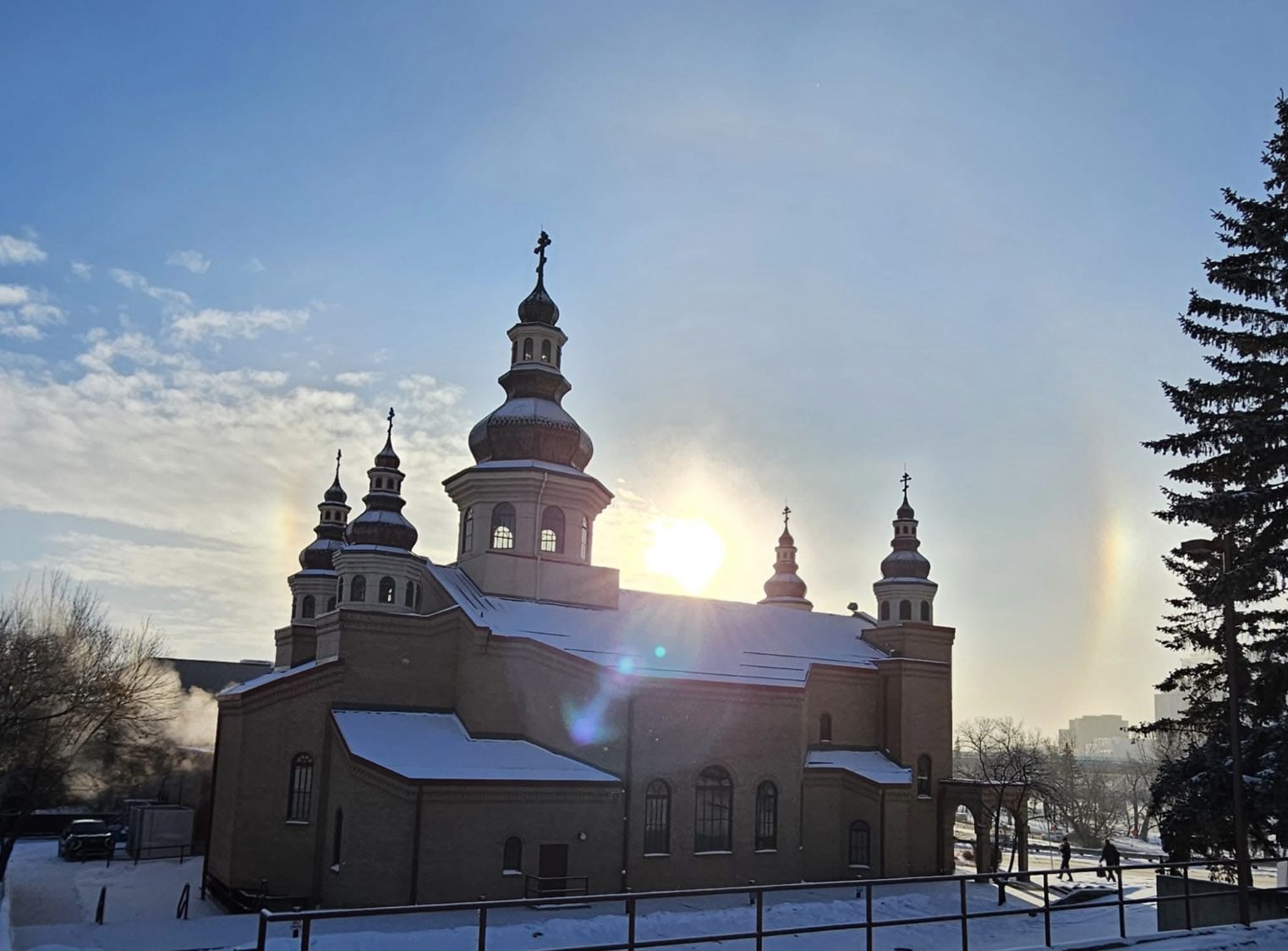
St. Vladimir’s Cathedral has played an important role in the lives of the Ukrainian people, becoming a “place of strength” where Ukrainian refugees could find solace. Let us hope that it will continue to save the souls of Ukrainians, and that they, in turn, will pray for victory and peace in their country, so that all refugees can return home as soon as possible.